Coordinate thermal rating and installation
LCA often performs in-house Neher–McGrath thermal analysis and pulling studies together. These evaluations address different requirements: the thermal study evaluates cable ampacity and heat dissipation, while the pulling study evaluates installation forces and pressure.
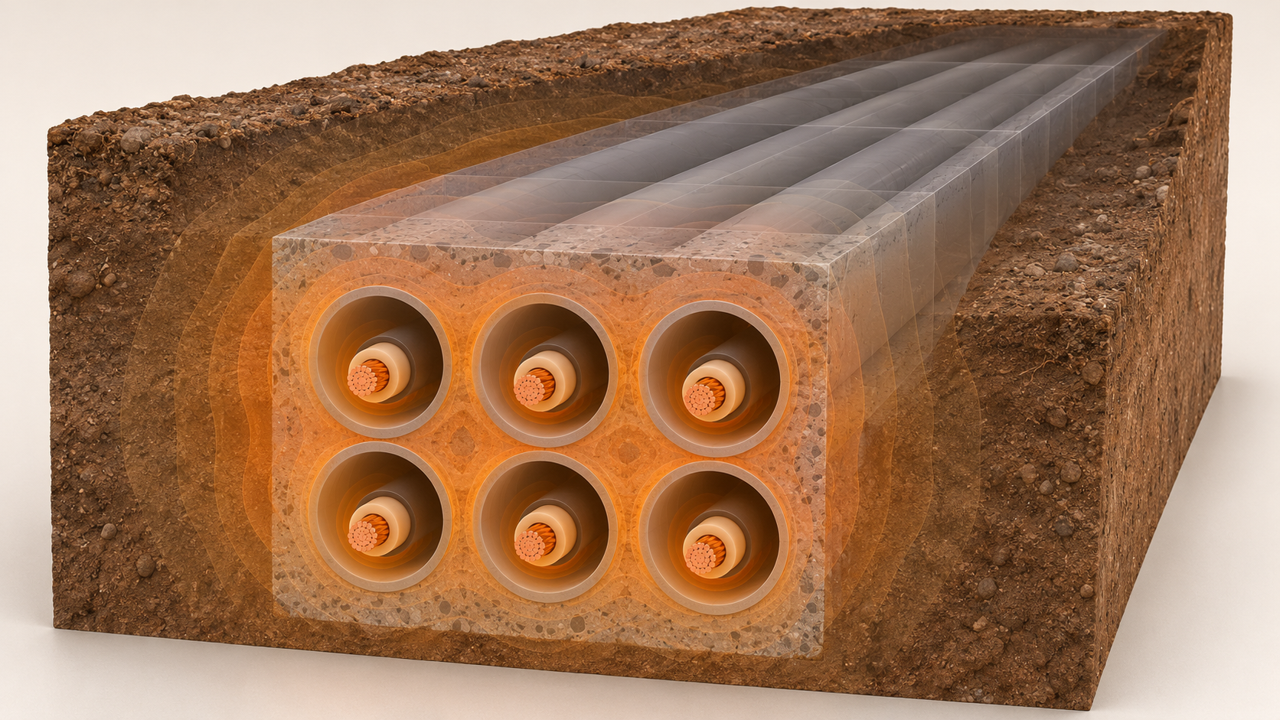
Coordinating the studies helps the project team review the proposed cable system as one engineering effort. Explore LCA’s Neher–McGrath resource.
What we evaluate
- Pulling tension for the defined cable group, route and direction.
- Sidewall bearing pressure at modeled bends and rollers.
- Cable dimensions, weight, conductor construction and pulling attachment basis.
- Conduit dimensions, slopes, elevation changes, bend radii and feed resistance.
- Friction and lubrication assumptions with project-specific comparison cases.
- Separate jamming and installation concerns that a passing force result does not resolve.
Inputs should describe the actual installation
| Study input | Why it matters |
|---|---|
| Cable and conductor data | Use the actual product dimensions, weights and conductor construction. |
| Raceway and route geometry | Reconcile straight lengths, changes in elevation, bend angles and radii. |
| Cable group and direction | Account for the proposed arrangement and the direction of the pull. |
| Friction and lubrication | Document the assumed interface and application conditions; confirm applicability. |
| Evaluation criteria | State the tension and pressure limits and their supporting basis separately. |
Compare appropriate alternatives
Where the proposed full pull exceeds a selected criterion, alternatives must use documented route geometry and installation arrangements. These can include reversing the pull direction, reviewing reel sizes and feed arrangements, increasing bend radii, considering different conduit and lubricants, or defining access points and calculating shorter pull sections. Stage results are calculated for the proposed stage rather than inferred from length ratios.